Bone Broth Recipe: Nutrient-Dense Elixir for Gut Health and Immunity
Discover the soothing warmth of homemade bone broth—a nutrient-dense elixir that nurtures your gut health and boosts …
Meats encompass premium poultry, beef, pork, and wild game preparations engineered to maximize protein tenderness, render succulent fats, and build deep savory flavor through searing, roasting, and gentle braising.
Tender outdoor hunter beef stew simmered slowly with root aromatics and savory pan reduction.
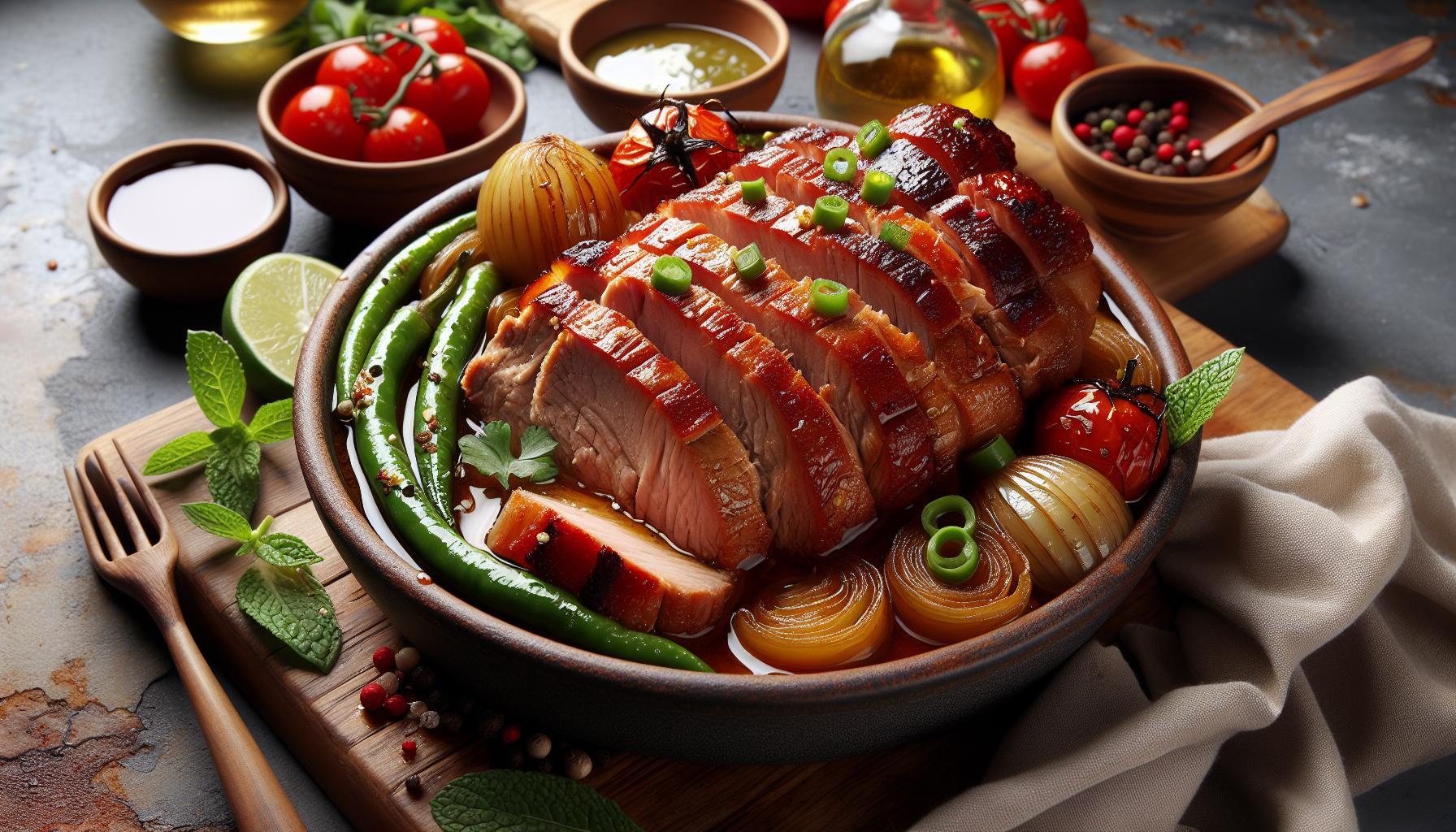
Pork shoulder simmered until fork-tender in roasted green chile verde and tomatillo broth.
Classic beef meatloaf bound with tender milk panade and glazed with sweet tangy tomato sauce.
Cooking meats properly requires distinguishing between tender quick-cooking cuts (loin, ribeye, tenderloin) and tough collagen-rich cuts (chuck, shoulder, shank). Tender cuts need fast, high-heat searing followed by brief resting to prevent protein tightening. In contrast, tough cuts require sustained moist heat between 180°F and 200°F to hydrolyze dense triple-helix collagen fibers into silky, melt-in-your-mouth gelatin.
Resting meats post-cooking is non-negotiable. Muscle fibers contract during searing, forcing internal juices toward the center of the cut. Giving meats 5 to 15 minutes of resting time off heat allows fibers to relax and re-absorb moisture, ensuring every slice remains succulent and tender rather than pooling juice on the cutting board.
| Ingredient / Category Matrix | Biochemical Role & Preparation Dynamics | Flavor Contribution & Texture Impact |
|---|---|---|
| High-Heat Sear & Rest | Pan-searing at 400°F followed by mandatory 10-minute resting | Deep caramelized crust with uniformly juicy, tender interior |
| Slow Collagen Braise | Sub-simmering at 190°F in seasoned braising liquid for 3+ hours | Fork-tender meat fibers bathed in natural rich gelatin gravy |
| Moisture-Sealed Panade | Ground meats blended with milk-soaked breadcrumbs before baking | Plump, tender meatballs and meatloaves that never turn dry |
| Bone-In Shank Simmer (Osso Buco) | Braising cross-cut marrow shanks with wine and tomatoes | Unctuous marrow essence melting into surrounding pan jus |
Always use an instant-read digital meat thermometer inserted into the thickest part of the meat away from bones, rather than relying on cooking times or color alone.
Crowding the pot causes meat to release moisture that cannot evaporate fast enough, causing meat to boil in its own juices instead of developing a flavorful brown sear.
Braising involves larger cuts of meat partially submerged in liquid with a lid. Stewing involves smaller, bite-sized pieces of meat completely submerged in liquid.