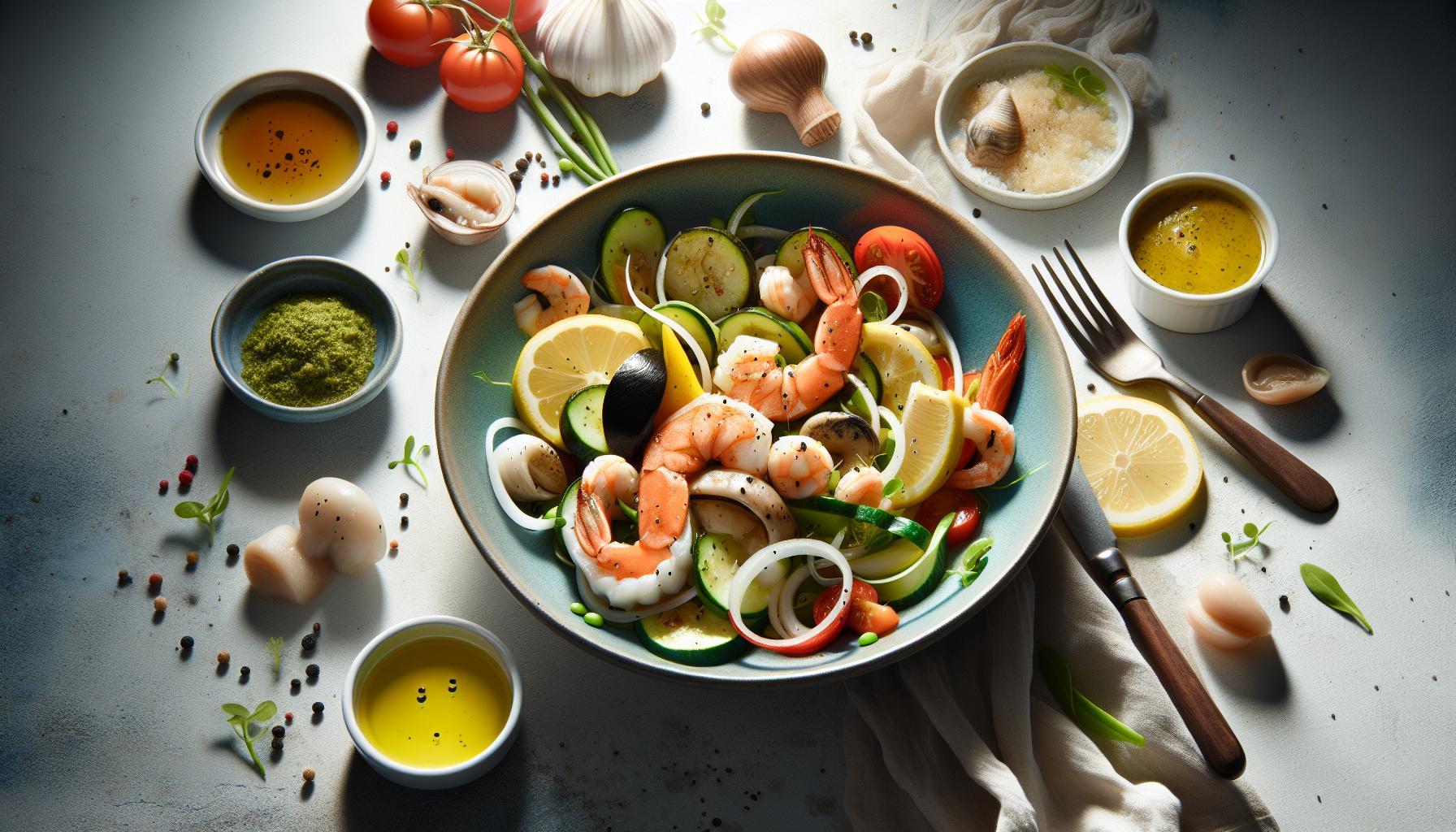
Trans-Ocean Recipes Recipe: Seafood Substitute Magic for Plant-Based Meals
Dive into the world of Trans-Ocean recipes, where seafood flavors meet plant-based magic! Discover how to create …
Seafood represents coastal culinary treasures from fresh and saltwater habitats—celebrated for their delicate muscle structures, healthy omega-3 fatty acids, and rapid cooking times that demand gentle thermal precision.
Restaurant-quality plump mussels steamed open in aromatic spicy beer broth with garlic and fresh herbs.
Delicate flounder fillets baked golden under a crunchy garlic, lemon, and oregano breadcrumb crust.
Succulent pan-seared salmon fillets glazed with sweet clover honey and fiery Caribbean jerk seasonings.
Seafood proteins differ fundamentally from terrestrial meats: fish live in near-weightless aquatic environments and have much less connective collagen. Their muscle fibers (myotomes) are short and separated by delicate sheets of connective tissue (myocommata) that melt at much lower temperatures (120°F to 140°F). Overcooking causes these fibers to contract abruptly, expelling moisture and leaving fish dry and flaky.
In bivalves like mussels and clams, rapid high-heat steaming is the ideal technique. Aromatic broths (beer, white wine, garlic) boil vigorously under a tight lid, generating steam that cooks mollusks gently in 4 to 6 minutes. The shells open as abductor muscles relax, releasing sweet briny sea liquor that enriches the broth into an irresistible dipping sauce for crusty bread.
| Ingredient / Category Matrix | Biochemical Role & Preparation Dynamics | Flavor Contribution & Texture Impact |
|---|---|---|
| High-Heat Steam (Mussels) | Sealed steaming over boiling aromatics for 4–6 minutes | Plump, tender shellfish that release sweet sea juices into broth |
| Oreganata Broiler Bake | Gentle oven bake under seasoned olive oil breadcrumb crust | Moist, flaky fish flesh protected beneath crunchy golden topping |
| Glazed Pan Sear (Salmon) | Searing skin-side down in cast iron followed by sweet-spicy glaze | Crispy, crackling skin with silky, medium-rare center flesh |
| Gentle Coconut Fish Poach | Poaching white fish in sub-boiling coconut lime broth at 170°F | Tender fish chunks that remain intact without disintegrating |
Gently press the center of the fillet with a fork; the flesh should easily separate into moist flakes along its natural seams, showing a semi-translucent center.
Yes. If a mussel remains tightly closed after 6 to 8 minutes of vigorous steaming, its abductor muscle failed to relax, which can indicate it was dead before cooking.
Ensure the fish skin is completely dry, preheat your skillet until very hot, add oil with a high smoke point, and do not attempt to move the fish until the skin naturally releases from the pan.