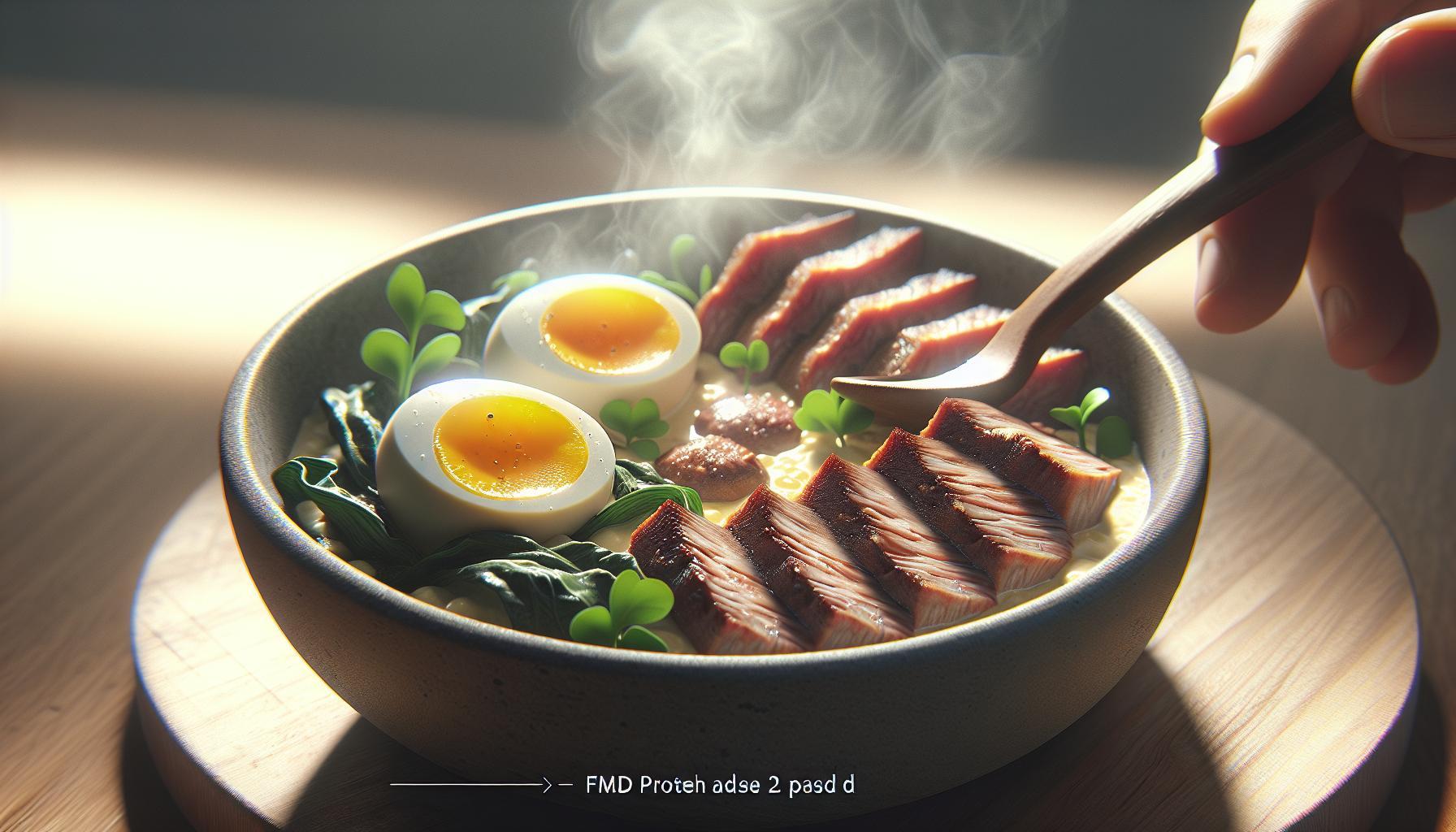
Eat Fast Run Slow: Athlete-Approved Meals for Optimal Performance
Fuel your body with "Eat Fast Run Slow," where athlete-approved meals are crafted for peak performance. Discover …
High Protein encompasses nutrient-dense culinary preparations engineered to optimize muscle protein synthesis, maximize satiety hormones, and deliver robust daily amino acids through premium meats, eggs, and legume pairings.
Silky, slow-cooked soft scrambled eggs whipped with cottage cheese for luxurious breakfast protein.
Balanced, portion-calibrated meals designed to support metabolic health and steady muscle preservation.
Tender lean beef and colorful root vegetables simmered in rich bone broth for post-workout recovery.
Cooking high-protein meals requires careful temperature control to avoid making lean meats dry and chalky. Proteins consist of tightly folded amino acid chains; as heat is applied between 140°F and 160°F, these chains denature and form a delicate coagulated network. If heated past 165°F without sufficient moisture or fat, the network contracts excessively, squeezing out intracellular juices and leaving meat tough.
Blending cultured high-protein dairy (such as small-curd cottage cheese or Greek yogurt) into whole eggs before scrambling protects delicate egg albumen from high pan temperatures. The lactic acid and casein curds melt into the eggs, yielding rich, velvety scrambled curds with over 25 grams of complete protein per serving.
| Nutritional / Thermal Strategy | Biochemical Mechanism & Ingredient Dynamics | Target Texture & Metabolic Benefit |
|---|---|---|
| Cottage Cheese Scramble | Blending cottage cheese curds into whole eggs over gentle heat | Custardy, ultra-tender eggs with boosted leucine and casein |
| Slow Collagen Extraction | Long-term simmering of marrow bones and tendon-rich beef shanks | Gelatin-rich broth that supports connective joint tissues |
| Dry-Brined Poultry Breast | Salting lean white meat 12 hours ahead of roasting at 375°F | Juicy, tender slice with enhanced muscle hydration |
| Lentil & Game Stewing | Combining slow-simmered game meats with earthy split pulses | Complete complementary amino acid profile with dense fiber |
Whisk 1/4 cup of low-fat cottage cheese or liquid egg whites into two whole eggs before cooking. The curds dissolve smoothly, adding 7 to 10 grams of clean protein without altering flavor.
Use a digital meat thermometer to pull proteins off the heat when internal temperature reaches 160°F (chicken) or 145°F (pork); carryover heat will finish cooking to safe limits while preserving moisture.
Roasted edamame, spiced crispy chickpeas, quinoa pilafs, and Greek-yogurt dressed cabbage slaws provide substantial protein alongside vitamins and dietary fiber.